Bedding · Pillow guide
Choosing a Wool Pillow: Compare Loft, Support, and Care
A pillow is a small landscape beneath the head: its height, resilience, and warmth can shape the way a night of sleep feels. Wool offers a breathable alternative to many synthetic fills, but wool pillows are not all built alike. Understanding construction, loft, cover fabric, and care can help you choose one that suits your sleeping position and your tolerance for maintenance.
Wool has a long history as a bedding fiber because it is resilient, insulating, and able to manage moisture. In a pillow, those qualities meet a practical challenge: the fill must cushion the head without allowing the neck to fall into an awkward angle. A pillow that feels inviting in a showroom—or in a product description—may not provide the right height once you settle into your usual position.
The best comparison starts with your own sleep habits, not a promise that one material or firmness works for everyone. Consider whether you sleep on your side, back, or stomach; whether you tend to feel warm; how much support you prefer; and whether you are willing to spot-clean a pillow rather than wash it. Then look closely at how the wool is arranged inside and what the maker says about its care.
What makes a wool pillow different?
Wool is a natural animal fiber with a springy structure. In bedding, it can offer a responsive, resilient feel rather than the sinking sensation some people associate with softer fills. It also helps buffer changes in temperature and humidity: wool can absorb moisture vapor and release it as conditions change, while its structure traps air for insulation. These properties may contribute to a comfortable sleep environment, but they do not guarantee that any particular person will sleep cooler or better.
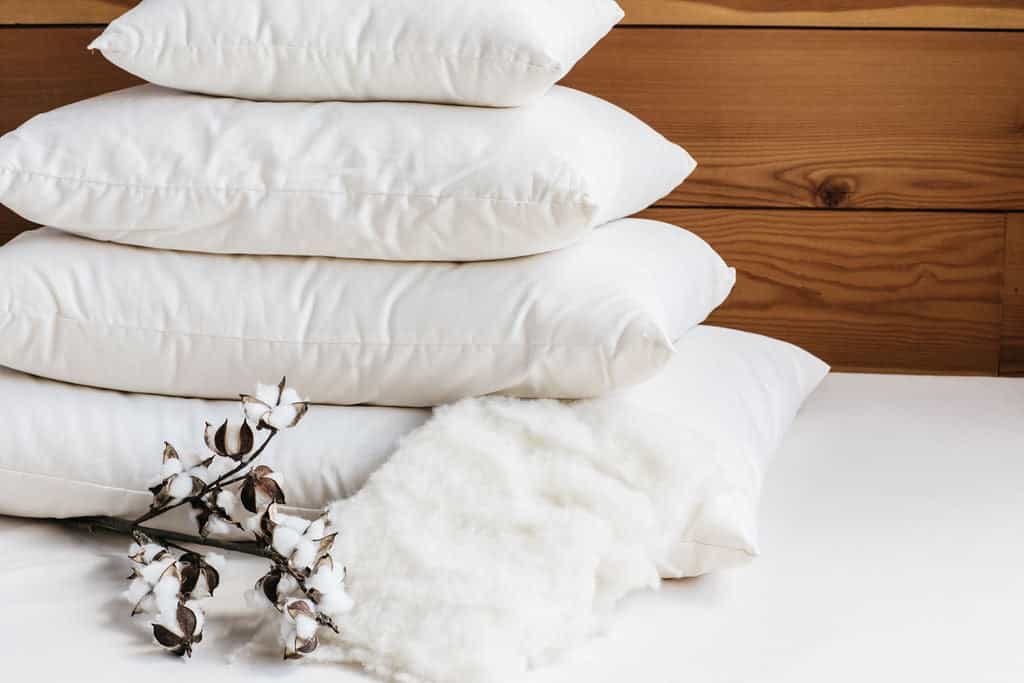
“Wool pillow” describes a family of constructions, not a single feel. Some pillows contain loose wool fibers or small wool clusters. Others use layers of wool batting, arranged in a more structured form. The shell may be cotton, often in a plain weave or sateen. Fill, construction, dimensions, and case all influence how the pillow behaves under the head.
It is also useful to distinguish a pillow’s materials from its claims. Natural, organic, and hypoallergenic are not interchangeable terms. If certification matters to you, check which component is certified and what the certification covers. A GOTS certification, for example, relates to textiles and their processing under defined requirements; it is not by itself a guarantee that a pillow will suit every sleeper or resolve an allergy.
Loft: the height beneath your head
Loft is the pillow’s height when it is in use. A pillow’s uncompressed thickness is only part of the story. Wool may compress beneath body weight, and the amount of compression depends on the fill, the way it is arranged, and the pillow’s overall size. A lofty pillow can become relatively low when compressed; a flatter one may feel more supportive if its fill holds its shape.
Your sleeping position offers a useful starting point. Side sleepers usually need enough height to fill the space between the shoulder and head, helping keep the neck from tilting down toward the mattress. Back sleepers often prefer a lower profile that supports the natural curve of the neck without pushing the chin toward the chest. Stomach sleepers commonly need a very low pillow—or none—because excess height can turn the head and extend the neck.
These are broad patterns, not rules. Shoulder width, mattress firmness, body shape, and personal comfort all affect the gap a pillow needs to fill. A softer mattress may allow the shoulder to sink farther, changing the distance between the head and mattress. If you share a bed, your partner’s preferred pillow height may differ even when your mattress is the same.
When comparing wool pillows, look for dimensions and fill weight when they are provided, but do not treat either as a direct measurement of sleeping height. A pillow’s shape and construction affect how that material is distributed. Some wool bedding makers note that layered batting may settle during the first months of use. One certified wool bed pillow listing, for example, says its fill may settle by 15–30% over that period. That is a product-specific expectation, not a universal rule for wool pillows.
Support and firmness: more than a soft-or-firm label
Support describes how well a pillow maintains a useful position for your head and neck. Firmness is a perception of how resistant it feels when pressed. The two are related, but they are not the same: a pillow can feel soft at the surface and still resist flattening, or feel firm while offering too much or too little height.
Loose fill can shift as you move, allowing the pillow to settle around the head. That can feel adaptable, though it may require occasional reshaping. Layered wool batting is more organized: the fill is arranged in sheets, which can create a steadier, more uniform surface. A tightly enclosed batting construction may be less adjustable than loose fill, so pay attention to whether the design lets you add, remove, or redistribute wool.
People with shoulder or neck discomfort may be tempted to select the firmest option. Yet a pillow is not a medical treatment, and more firmness does not automatically mean better alignment. If discomfort is persistent, severe, or associated with other symptoms, a qualified health professional can provide guidance beyond what a product description can offer. For everyday comparison, focus on whether the pillow keeps your head in a comfortable position without forcing it forward, backward, or sideways.
Give a new pillow time for a fair trial, following the maker’s return policy and care instructions. Notice how it feels in your normal sleeping posture rather than judging it only while sitting upright. If you wake with a sense that your head has sunk too far or been held too high, the loft or construction may not suit you.
Fill construction: loose wool or layered batting?
Loose wool fill can create a yielding, springy surface. Depending on the design, it may be possible to move the fibers around or adjust the loft. Confirm that the pillow actually has an accessible opening before assuming it is adjustable: some wool pillows are firmly enclosed and intended to retain their original fill level. The Naturally Organic Hudson Shredded Latex Pillow is not a wool pillow, but it illustrates why fill type and adjustability should be checked separately rather than inferred from a product category.
Wool batting takes another approach. Instead of a loose mass of fibers, the wool is arranged in layers inside the cover. This can produce a more consistent shape, although the pillow may be less customizable. Hand-built wool pillows with layered batting may soften or settle as they are used. Reading the construction notes can help set expectations for the first weeks and months.
Ask a few straightforward questions before choosing:
- Is the wool loose, clustered, or layered as batting?
- Can the fill be reached and adjusted, or is the pillow sealed?
- Does the maker give a fill weight, pillow dimensions, or expected settling?
- Does the product include a separate removable case or protector?
- Are there specific instructions for airing, spot cleaning, or refreshing the pillow?
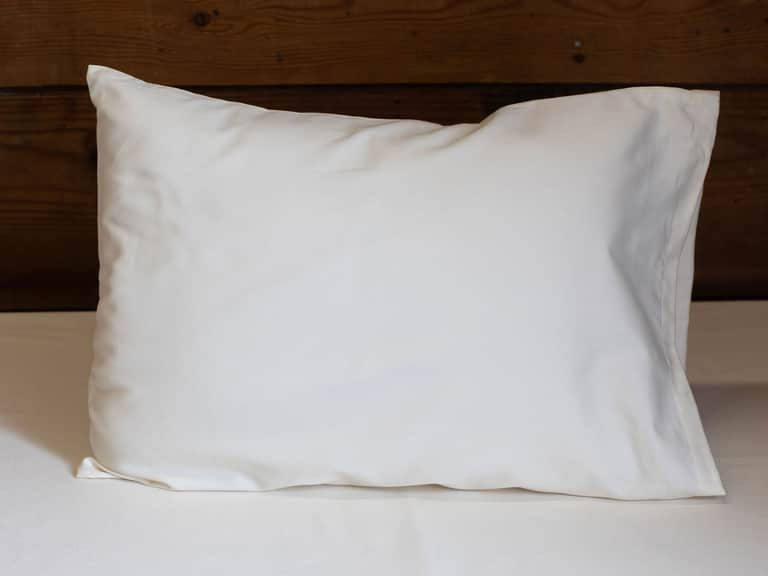
A product that answers these questions clearly makes comparison easier. For example, the Certified Organic Wool Bed Pillows are described as hand-built with GOTS-certified wool batting and an organic cotton sateen case. Their listing says they are spot-clean only and notes that the wool fill may settle during early use. That combination of construction and care information is more useful than a general promise of “natural comfort” alone.
The cover matters, too
The pillow cover is the layer you feel against your face and the barrier around the fill. Cotton is a common choice because it is familiar, breathable, and available in different weaves. Sateen generally has a smoother hand and a subtle sheen, while percale tends to feel crisper and more matte. The cover’s weave, thickness, and finish can influence warmth and texture, even when the wool inside is similar.
Look for practical details: Is the shell made from cotton? Is it removable? Does the product include an additional pillowcase? Can the case be machine washed, and at what temperature? A removable, washable outer case can make day-to-day care simpler, particularly when the wool insert itself must remain dry.
Certifications can help clarify how a product was made, but read their scope carefully. A listed certification may apply to the cotton fabric, the facility, the wool, or a particular part of processing. Check the product information rather than assuming that every component has the same certification status. If you are choosing a pillow because of a specific sensitivity, consult the relevant product details and, when needed, a health professional.
Care: the important distinction between case and insert
Wool pillows often need a different cleaning routine from pillows filled with washable synthetic fibers. Many are marked spot-clean only. Saturating the wool can make it difficult to dry thoroughly and may affect the fill’s shape or feel. A washable case does not mean the pillow insert is washable: check the instructions for each layer before putting anything in a washing machine.
For routine care, use a pillowcase or protector and wash that layer according to its label. If a spill occurs, follow the maker’s instructions and address it gently. Avoid soaking the pillow unless its care label explicitly permits washing. Allow a treated pillow to dry completely before putting it back on the bed. A clean, dry environment helps prevent lingering moisture and odors.
Some wool pillows can be aired outdoors or briefly placed in indirect sunlight, but follow the manufacturer’s guidance. Direct, prolonged sun or heat can be unsuitable for some materials and finishes. Turning or gently reshaping a pillow may help distribute use, provided its construction allows it. Avoid vigorous beating or pulling that could distort a tightly layered fill or damage the seams.
When comparing options, consider the full care burden, not just the first feel. A removable case that can be machine washed may be a meaningful convenience. A spot-clean-only pillow may still suit your home if you use a washable protector and prefer less frequent deep cleaning. The right choice depends partly on how you want to maintain bedding over time.
Wool for travel and changing routines
Not every wool pillow is intended for a full-size bed. A travel pillow can provide a familiar material and feel away from home, but its smaller dimensions mean it is not automatically a substitute for a standard bed pillow. Check the stated size, fill, and care instructions, especially if you plan to carry it regularly.
The All-Natural Travel Pillow is described as a lightweight, packable pillow with organic cotton fabric and Premium Eco Wool fill. Its listing says the pillow itself is spot-clean only, while the accompanying case can be washed in cold water. That distinction is worth noting for travel: a removable washable layer can help keep the surface fresh, but the insert still needs the care its maker specifies.
A practical comparison checklist
Before deciding, compare products against the conditions that matter most in your bedroom. A short checklist can keep appealing language from overshadowing useful specifications:
- Sleep position: Does the stated loft suit the space between your shoulder, head, and mattress?
- Feel: Do you prefer a resilient, springy surface or a more structured, layered one?
- Adjustability: Can you change the fill level, or is the pillow sealed?
- Materials: What are the fill and cover made from, and which components are certified?
- Care: Is the insert spot-clean only? Is a separate case washable?
- Settling: Does the maker describe how the fill may change with use?
- Fit: Are the dimensions compatible with your pillowcase and bed?
- Return terms: Can you test the pillow at home, and what conditions apply?
These details are especially helpful when two products share a material label but differ in construction. A wool pillow with layered batting and a cotton sateen shell may feel very different from one filled with loose wool clusters. Likewise, two pillows with similar dimensions can behave differently if one compresses more readily or has a denser fill.
The right choice is the one that fits your sleep
Wool can bring resilience, moisture management, and a naturally insulating character to a pillow. Those traits are useful context, not a substitute for checking loft, support, and maintenance. Sleeping position offers a first guide to height; construction helps explain how the pillow may compress and hold its shape; and the care label determines how practical it will be in everyday life.
Start with the position in which you spend most of the night, then compare the pillow’s fill structure and adjustability. Check the cover and certifications, and read the care instructions before buying. A wool-filled pillow is a considered choice: its comfort depends not only on the fiber, but on how that fiber is built into the object beneath your head.