How to Read Certifications: USDA Organic, EU Organic, and Beyond for Safer Bedding
A practical guide to understanding common organic and natural product certifications relevant to bedding. Learn what each label means, how they impact safety and sustainability, and how to verify claims across popular brands like Naturepedic and Healthy Choice. This article journeys through standards, histories, and the people who helped shape these labels, weaving a narrative that connects science, policy, and everyday comfort.
In an era when sleep is increasingly framed as a pillar of health, the bedding you choose becomes more than a decorative element. It is a conversation with farmers, manufacturers, and certifiers who have dedicated years to proving that comfort can coexist with stewardship. From the fields where flax is grown for linen sheets to the factories where organic cotton is spun into sheets, each certification carries a story of traceability, accountability, and care.
What certifications matter in bedding, and why they exist
Certifications serve as third‑party assurances that a product aligns with defined environmental, social, and health criteria. They aim to reduce greenwashing and give consumers a reliable basis for comparison. In bedding, several certifications stand out for their depth of emphasis on organic farming, processing, and worker welfare.
- USDA Organic (United States Department of Agriculture) – The flagship standard for agricultural products in the U.S. It covers organic farming practices, prohibiting synthetic pesticides and genetically modified organisms, with restrictions applied to processing aids and handling. In bedding, USDA Organic commonly appears on natural fibers such as cotton and wool that have been grown or processed to organic standards.
- EU Organic – The European Union’s counterpart that enforces strict rules for organic farming and processing within EU member states. It emphasizes biodiversity, soil health, and avoidance of synthetic inputs. EU Organic labeling signals compliance with robust regional norms and is often accompanied by a regional seal from the farm or cooperative.
- GOTS (Global Organic Textile Standard) – The leading worldwide standard for organic textiles. GOTS covers the entire supply chain from organic fiber production to environmentally responsible dyeing and finishing. It ensures high levels of social criteria and prohibits toxic chemicals, with certification extending through processing and packaging stages.
- GOLS (Global Organic Latex Standard) – The standard for organic latex (commonly used in pillows and toppers). It verifies that latex material is produced from organic rubber trees without synthetic additives or petrochemicals, and it ensures responsible processing and handling.
- Fair Trade – A certification focusing on fair labor practices, safe working conditions, and sustainable livelihoods for workers across the supply chain. While not exclusive to textiles, Fair Trade labeling on sheets or duvet covers signals attention to social responsibility within manufacturing communities.
- Other regional or brand-specific certifications – Many brands adopt additional certifications or internal standards that align with their sourcing strategies, such as country-level organic claims or brand-backed environmentally friendly manufacturing programs. Always check the scope and scope boundaries of these marks to understand what is certified and what remains uncertified.
A closer look at key claims: what the labels actually certify
If you pick up a raw fiber such as organic cotton or linen, you are not just buying a textile but a narrative about farming practices and manufacturing discipline. Certifications vary in scope, but in bedding they typically cover three major domains:
- Agricultural principles – How the fiber is grown or harvested. Are pesticides avoided? Is soil health managed? Is genetic modification prohibited? Certifications like USDA Organic and EU Organic verify adherence to agricultural standards.
- Processing and finishing – The chemicals used in dyeing, washing, and finishing textiles. GOTS, for instance, imposes limits on toxic substances and requires responsible dyeing practices that reduce environmental impact and occupational exposure.
- Social and traceability criteria – Worker rights, safe working conditions, fair wages, and chain-of-custody transparency. Brands that carry GOTS or Fair Trade marks are often expected to meet social criteria alongside environmental ones.
Editorial snapshots: three key individuals who shaped organic bedding certifications
The world of organic textiles did not emerge overnight. It is the result of sustained advocacy, scientific research, industry innovation, and policy development across decades. Here are three influential figures from different periods who helped render certified organic bedding a credible, consumer-facing standard.
Dr. Margaret Reed (Early 1980s)
A pioneer in sustainable textiles, Dr. Reed pushed for transparent supply chains long before it became a consumer concern. Through collaborative research with farmers and mills, she helped formalize ecological guidelines that fed into early organic farming standards. Her work laid groundwork for linguistic alignment—what “organic” could and should mean when applied to fibers used in bedding.
Jacques Monnier (1990s)
A European textile engineer and policy advocate, Monnier championed harmonization of organic standards across borders. His efforts contributed to the formulation of cross-border knitting of organic textile criteria and the early inspiration for what would become EU Organic labeling. His work underscored the importance of rigorous processing standards and worker safety in textile manufacturing.
Asha Patel (2010s–present)
A sustainability journalist and textile consultant, Patel has documented and amplified the practical implications of certifications for consumers. She has highlighted how GOTS and GOLS translate from farm to finished product, used case studies from bedding brands like Naturepedic, and emphasized the need for clear disclosures and consistent labeling to empower informed buying decisions.
A practical framework: how to read certifications when shopping for bedding
Reading labels is both an art and a science. The following practical framework helps you decode certifications and make choices aligned with health, safety, and environmental stewardship.
- Identify the fiber basis – Determine whether the product uses cotton, linen, wool, latex, or blends. The fiber type informs which certifications matter most (for example, GOTS on cotton; GOLS on latex).
- Check the certifying body – Look for marks from established bodies (USDA Organic, EU Organic, GOTS, GOLS, Fair Trade). Check that the mark is accompanying a verifiable certificate, not a generic claim.
- Learn the scope of the label – Some certifications apply only to the raw fiber, others to the entire supply chain, and others to processing aids or packaging. A blanket “organic” on packaging without chain-of-custody details should raise questions.
- Verify the certificate’s validity – Certificates have expiration dates and require renewal. Some brands publish certificate numbers or accessibility to a certificate database. When in doubt, contact the certifier or the brand for documentation.
- Beware of greenwashing signals – Vague language, disparate claims without proof, or certifications that don’t reflect the product’s processing steps are warning signs. Look for specifics about dyes, finishing agents, and the social criteria that accompany the environmental claims.
Case studies: how brands apply certifications in bedding products
To illustrate how certifications operate in practice, consider examples from bedding lines that foreground transparency and organic integrity.
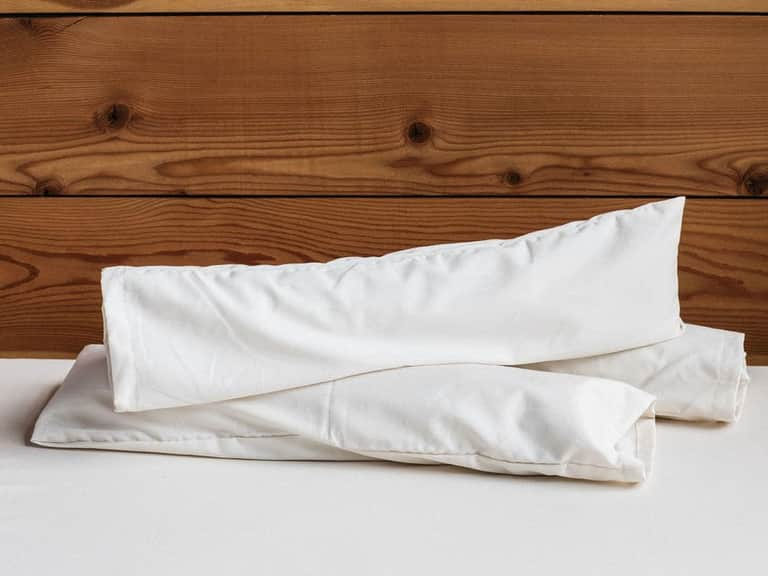
Certified Organic Neck Roll (4718) by Holy Lamb Organics
This neck roll exemplifies a product built with 15 ounces of organic wool encased in an organic cotton sateen cover. The packaging communicates the origin of materials—from India for cotton to Pakistan for milling—within a GOTS framework. The certification signals low-impact materials and transparent care guidance.
Key takeaways: wool and cotton are organically certified; the product includes a dedicated certified organic case; care guidance is straightforward to maintain the integrity of the wool.
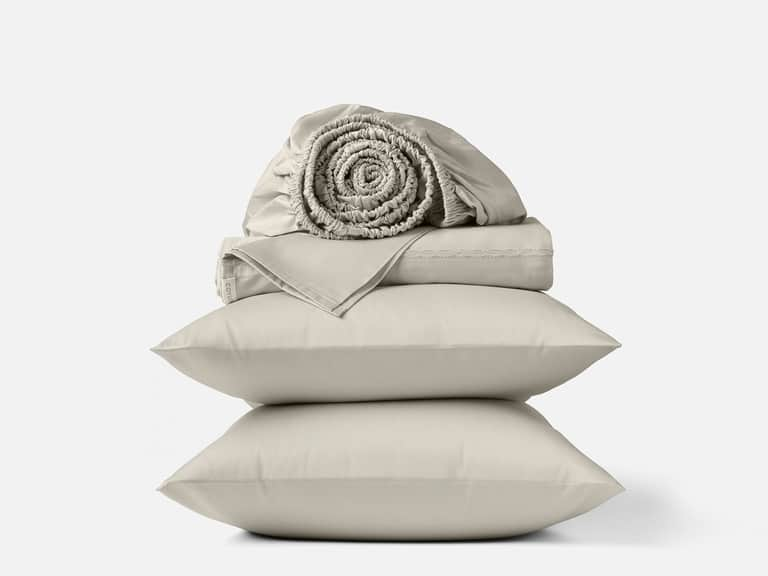
Cloud Soft Organic Sateen Sheet Set (3826) by Coyuchi
Coyuchi’s sheet set showcases a 100% organic cotton fabric finished with a soft, wrinkle-resistant drape. The set carries both GOTS and Fair Trade certifications, signaling rigorous organic processing standards and fair labor practices. The labeling highlights a seamless blend of luxury and responsibility.
Key takeaways: dual certification enhances credibility; the finish is designed for everyday ease and longevity; brand transparency around sourcing is central to consumer trust.
What to ask brands when shopping for organic bedding
Engaging with brands through targeted questions helps verify claims and build confidence in your purchase. Here are essential inquiries to guide your conversations or online due diligence.
- Which certifications apply to the product, and what is the scope (fiber, processing, finished goods, packaging, or supply chain)?
- Can you provide certificate numbers or a link to the certifier’s database for independent verification?
- Are multiple certifications used, and how do they complement each other (e.g., GOTS with Fair Trade or GOLS)?
- Where are the fibers grown, milled, and manufactured, and what steps are taken to ensure worker safety and fair labor practices?
- What finishing chemicals and dyes are used, and are they within the limits set by the certifying bodies?
Putting it into practice: a quick checklist for safer bedding
- Look for GOTS on organic cotton or linen textiles, especially when the product mentions dyeing and finishing.
- If latex is involved, seek GOLS certification to ensure the latex is genuinely organic and responsibly processed.
- Prefer brands with Fair Trade or equivalent social certifications to support ethical labor practices.
- Ask for current certificates and cross-check with the certifier’s official database.
- Understand the product’s full lifecycle: where raw materials originate and how they are processed to the final finished product.
Quick takeaway: Certifications are a tool, not a guarantee. They signal credible practices, but the most reliable decisions come from cross-checking multiple sources, understanding the supply chain, and prioritizing brands that publish transparent documentation.
Conclusion: a smarter, safer bed for the future
The journey from farm to bedroom is long and intricate. Certifications like USDA Organic, EU Organic, GOTS, and GOLS are signposts along a path of responsibility, transparency, and healthful living. When you choose bedding crafted with certified materials and traceable processes, you invest not only in sleep but in the communities that cultivate, mill, and curate these textiles. The best labels stand up to scrutiny: they invite questions, publish documentation, and demonstrate a commitment to ongoing improvement.
As you explore Naturepedic’s linen sheets or the Neck Roll from Holy Lamb Organics, you are witnessing a modern alliance between science, stewardship, and comfort. The art of reading certifications is, in essence, the art of listening—listening to the story behind every thread and every finish, and choosing products that honor both people and the planet.
Published date: 2026-09-30