Bedding Guide
Naturepedic Sheets: How Percale and Sateen Feel Different
The difference between percale and sateen begins with the path each thread takes across the loom. That small change in construction shapes the character of the fabric: one tends to feel crisp and airy, the other smooth and softly draped. Understanding the weave can help you choose organic cotton sheets that suit your skin, sleeping temperature, and idea of comfort.
Two weaves, one familiar fiber
Percale and sateen are names for weave structures, not separate kinds of cotton. Both can be made from organic cotton, and both begin with the same basic materials: fibers spun into yarn, then interlaced on a loom. The difference is how those yarns pass over and under one another. That arrangement influences a sheet’s surface, weight, drape, and airflow.
It is a distinction you can often feel before you can explain it. Percale has the fresh, straightforward character of a neatly pressed shirt or a cool hotel bed: matte, lightly crisp, and easy to move across. Sateen has a smoother hand and more fluid drape, with a surface that can feel softly polished. Neither is inherently better. The right choice depends on what feels good to you and how you sleep.
Naturepedic organic cotton sheet options include both percale and sateen constructions. Looking beyond the word “organic” to the weave gives you a more practical way to compare them. Certification describes standards for materials and processing; weave describes the textile experience you meet each night.
Percale: crisp, matte, and open to airflow
Percale uses a simple one-over, one-under pattern. Each yarn passes over one crossing yarn and beneath the next, creating a balanced, closely interlaced surface. The construction produces the familiar crisp feel and matte finish often associated with percale sheets. It can feel cool and clean against the skin, especially when the sheets are freshly washed.
That crispness is not the same as stiffness. Many cotton percale sheets soften with use and laundering while keeping their characteristic structure. A new set may feel a little firmer or more papery than a well-worn set; with time, the fabric can become more relaxed without losing its airy, composed quality. If you like bedding that feels light rather than plush, percale may be a natural starting point.
Air movement is another reason warm sleepers often investigate percale. The balanced weave tends to create a breathable, lightweight feel, and the matte surface does not cling in the same way some people associate with smoother fabrics. That does not mean a weave can regulate body temperature by itself: room conditions, mattress materials, duvet insulation, and personal comfort all matter. But if you routinely feel too warm under heavier bedding, the crisp hand of organic cotton percale may be appealing.
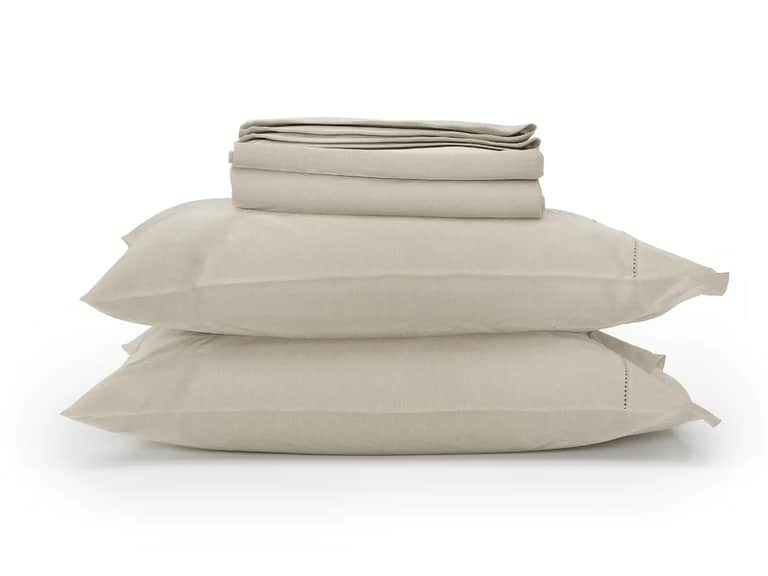
Naturepedic’s organic cotton percale sheet sets are described as breathable, lightweight, and crisp, with a matte finish. The listed set includes a fitted sheet, flat sheet, and pillowcases, and fitted sheets have a 15-inch pocket. Always check the current product details for the exact size, included pieces, and dimensions before choosing.
Sateen: smooth, soft, and fluid
Sateen uses a different arrangement, commonly described as four yarns passing over one before going under. Because more yarn floats across the surface, the fabric feels smoother to many people and takes on a softer drape. Those longer surface floats can also catch light, giving sateen a subtle sheen. The effect varies by fabric, finish, and lighting; sateen does not have to look glossy.
Against the skin, sateen often feels supple and smooth from the start. The fabric may settle closer to the body than percale, with a more flowing, substantial hand. For sleepers who enjoy a soft surface or a bed with a gently polished appearance, organic cotton sateen can make a satisfying alternative to a crisp, matte weave.
A smoother feel should not be confused with a guarantee that the fabric is warmer. Sateen is often perceived as cozier because of its drape and surface, but actual comfort depends on the full bedding system and the person using it. Fiber quality, thread construction, room temperature, humidity, and the weight of the duvet all contribute. If you sleep warm, consider the complete setup rather than treating the weave name as a temperature promise.
Naturepedic describes its organic cotton sateen options as smooth and soft, with a richer drape than percale. Some product specifications also identify a 400-thread-count sateen fabric, while other sateen sheets may have different specifications. Compare the details for the particular item you are considering rather than assuming every sateen sheet is identical.
A practical comparison at a glance
| What to compare | Percale | Sateen |
|---|---|---|
| Typical hand-feel | Crisp, smooth, and lightly structured | Soft, smooth, and more fluid |
| Surface appearance | Usually matte | Often has a subtle sheen |
| Drape | Airy and less fluid | More relaxed and close-draping |
| A useful first question | Do you enjoy a cool, crisp sheet? | Do you prefer a smooth, softer surface? |
| Care | Follow the label; washing can soften the fabric over time | Follow the label; gentle care helps preserve the surface |
These are common characteristics, not guarantees. Cotton quality, yarn, finishing, and laundering can change how a particular sheet feels.
How to decide which weave fits you
Start with the sensation you want when you get into bed. If you like a sheet that feels crisp, cool to the touch, and relatively matte, percale is a strong candidate. If you gravitate toward a smooth, supple surface with a softer drape, sateen may suit you better. Your preference is more useful than a general claim that one weave is “best.”
Think about the sleep environment, too. Someone who shares a bed with a warm sleeper, uses a thick duvet, or lives through hot summers may want to explore lighter-feeling percale. A sleeper who prefers a more enveloping surface or wants a smoother hand may lean toward sateen. These are starting points rather than rules: personal temperature, bedding layers, and room conditions can easily change the result.
Consider how you like fabric to change over time. Percale can begin crisp and gradually soften with regular washing. Sateen may feel smooth and draped from the outset, then develop its own lived-in character with use. If possible, handle fabric samples or compare familiar garments with similar weave qualities before making a decision. A sheet is a daily-use textile; a few minutes of attention to touch may be more valuable than choosing by a specification alone.
Finally, think about care and routine. A sheet that fits your preferred feel but is inconvenient to launder may not be the right practical choice. Check the care label for water temperature, cycle, drying recommendations, and restrictions on bleach or fabric softener. Product directions vary, so do not assume that all organic cotton bedding should be washed in the same way.
Thread count is only one part of the story
Thread count refers to the number of threads in a defined area of fabric, but it does not describe the whole textile. It does not tell you whether the sheet is percale or sateen, how the yarn was spun, the length or quality of the cotton fibers, or how the cloth was finished. Two sheets with similar thread counts can feel quite different because their construction and finishing differ.
For this reason, thread count is best treated as one piece of context, not a universal score of comfort or quality. Weave, fiber, fabric weight, finish, and your own preference matter together. A breathable percale at a moderate count may be more appealing to one sleeper than a denser fabric; another may value sateen’s smoother hand. Compare descriptions and specifications for the exact sheet set, and be cautious of using one number to predict the entire experience.
Organic certification is another separate consideration. A certification such as GOTS addresses defined requirements for organic textile processing and other criteria within its standard. It does not indicate whether the fabric is crisp or silky. To understand both the material credentials and the feel, check the certification claim alongside the weave and product construction.
Fit matters as much as feel
A comfortable sheet also needs to fit the mattress. Before ordering, measure the mattress from surface to surface, including any topper or pad that will remain beneath the fitted sheet. Compare that combined depth with the fitted sheet’s pocket depth. Naturepedic percale sheet listings describe a 15-inch pocket, while other products may specify a different depth. The precise measurement for the set you choose should take priority.
Check the size name as well as the measurements. Twin, Twin XL, Queen, King, and California King are not interchangeable, and mattress dimensions can vary by manufacturer. If your bed includes a thick topper, a fitted sheet designed for a shallower mattress may pull loose at the corners. A secure fit helps the sheet stay in place and reduces bunching during sleep.
Look at what the set includes. Many sheet sets contain a fitted sheet, a flat sheet, and pillowcases, but the number and size of pillowcases can differ. Some listings provide standard or queen pillowcases; others may offer separate options. Checking the contents before purchase helps avoid surprises and makes it easier to coordinate a complete bed.
Care that respects the fabric
Good care begins with the instructions attached to the particular product. Organic cotton is not a single construction, and different finishes can call for different washing and drying methods. Some Naturepedic sheet descriptions recommend machine washing and tumble drying at low heat; other items specify cold water and a gentle cycle. Follow the label or current product directions rather than relying on a generic routine.
As a general habit, avoid overloading the washer so sheets can move freely. Separate them from items with zippers, hooks, or rough surfaces that may snag or abrade the fabric. Use detergent according to its directions and avoid unnecessary harsh treatment. If the care label permits tumble drying, removing sheets promptly can help limit creasing. Ironing is optional for many cotton sheets; if you prefer a smooth finish, check the recommended temperature first.
Washing can influence the hand-feel. Percale often becomes softer as it is used and laundered, while sateen’s surface benefits from care that limits friction and excessive heat. The purpose is not to preserve a showroom finish indefinitely but to keep the textile clean and comfortable without shortening its useful life.
Questions worth asking before you choose
- Which surface do I enjoy? Crisp and matte points toward percale; smooth and softly draped points toward sateen.
- Do I tend to sleep warm? Consider the full bedding setup, while noting that percale’s airy feel is often attractive to warm sleepers.
- How deep is my mattress? Include any topper or protector when checking fitted-sheet pocket depth.
- What comes in the set? Confirm sheet and pillowcase quantities, dimensions, and available bed sizes.
- What does the care label say? Match the care routine you can maintain to the product’s specific instructions.
- What does the certification cover? Verify the stated certification and understand that it describes material or processing standards, not the sheet’s softness.
The simplest test is still your own comfort
Percale and sateen offer two different expressions of organic cotton. Percale’s balanced weave gives it a crisp, matte character and an airy feel; sateen’s longer surface floats create a smoother hand and more fluid drape. These are useful distinctions, but they are not substitutes for checking the fabric, fit, care, and certification details of the specific sheet set.
When choosing Naturepedic sheets, begin with the feel you want at bedtime. Then check the fitted-sheet depth, set contents, and washing directions. If you favor freshness and structure, explore organic cotton percale. If you prefer softness and a more relaxed surface, consider organic cotton sateen. The best bedding is not the one with the most impressive-sounding specification; it is the one that feels right, fits well, and works with the rhythms of your home.
Frequently asked questions
Are percale and sateen made from different cotton?
No. Percale and sateen refer to weave patterns. Either can be made from organic cotton; the construction changes the fabric’s surface and drape.
Are percale sheets always cooler than sateen?
Not necessarily. Percale is commonly described as light and breathable, and many warm sleepers like its crisp feel. But sleep temperature also depends on the room, mattress, duvet, humidity, and individual comfort.
Does a higher thread count mean a better sheet?
Not by itself. Thread count is only one specification. Weave, yarn, fiber quality, finish, fabric weight, and personal preference all affect how a sheet feels and performs.
Will percale soften after washing?
Percale often softens with use and laundering, though the amount and pace depend on the fabric and how it is cared for. Follow the instructions for the specific sheet set.